A sump pump that stops working means trouble for Pittsburgh basements—we're talking serious water damage, mold problems, and repair bills that nobody wants to see. Most sump pumps give you 7 to 10 years of service with proper care, which means yours might be closer to retirement than you realize. Whether your pump quit completely, runs constantly, or makes noises that keep you up at night, understanding what's wrong makes all the difference. We'll walk you through the steps to diagnose your sump pump problems—from quick fixes you can handle to knowing when it's time to call Pittsburgh's hardest working plumbers.
What Every Pittsburgh Homeowner Needs to Know
Your sump pump fails at the worst possible moment—usually during heavy rainfall when Pittsburgh's clay soil can't handle another drop of water. We've seen basement flooding cause thousands of dollars in damage, and it happens faster than most people realize.
• Power problems come first: Most sump pump troubles we fix start with tripped breakers, loose plugs, or GFCI outlets that need a simple reset—check these before you panic.
• Float switches stick more than you'd think: Pour some water in that pit every few months to make sure your float rises and kicks the pump on, because a stuck float won't save your basement when you need it most.
• Pittsburgh winters freeze discharge pipes: Ice, leaves, and debris love to block where your water exits, leaving your pump running but not moving water anywhere useful.
• Call us for the big stuff: Motor problems, electrical issues, or pumps pushing 7-10 years old need professional eyes to keep your family safe and meet city codes.
• Don't wait when water's rising: Water damage moves fast—this isn't the time for DIY experiments when your basement's flooding.
Pittsburgh's heavy spring rains and that stubborn clay soil around here put serious stress on sump pump systems. Regular maintenance and knowing when to call professionals keeps your home dry and your wallet happy.
Here's How Your Sump Pump Actually Works
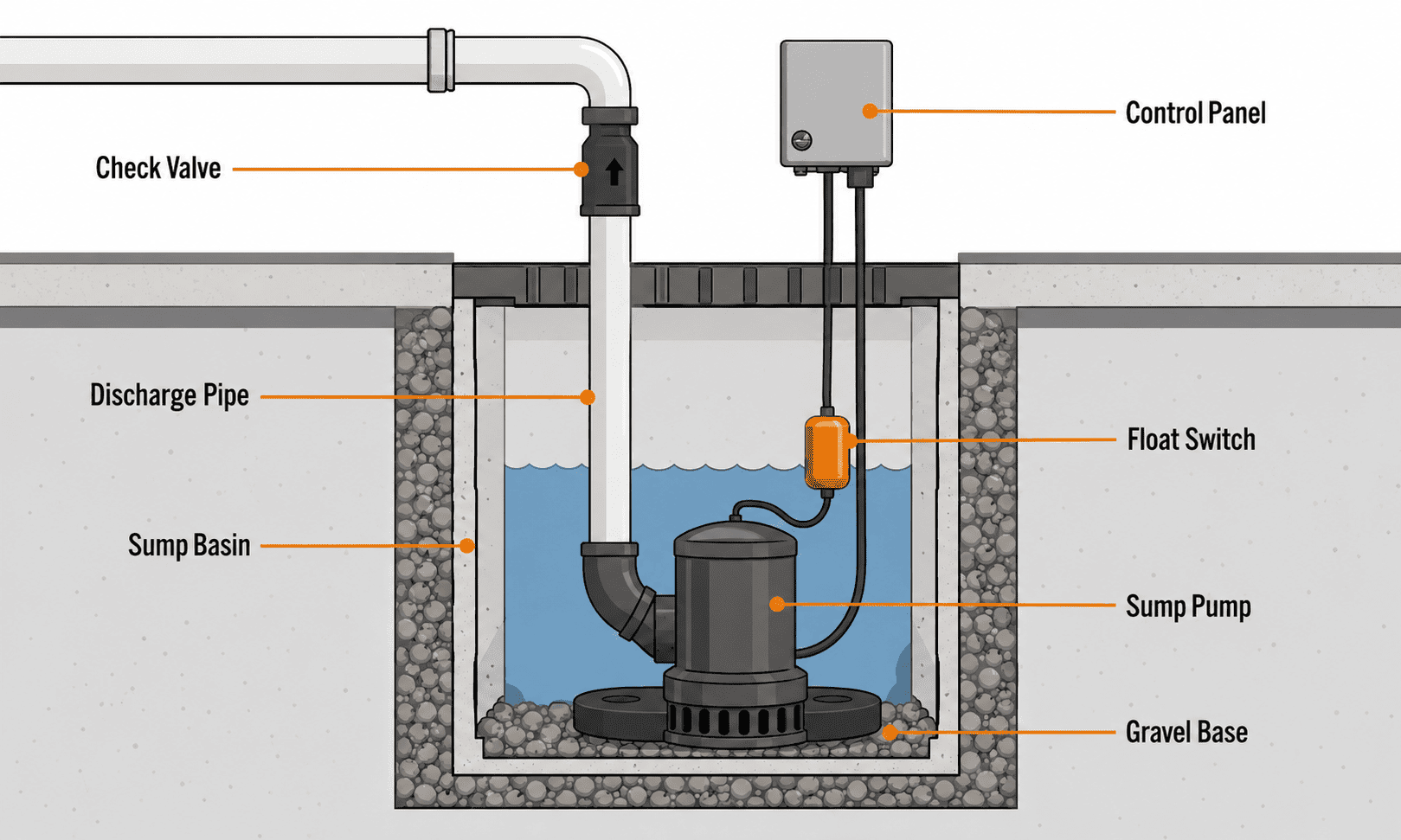
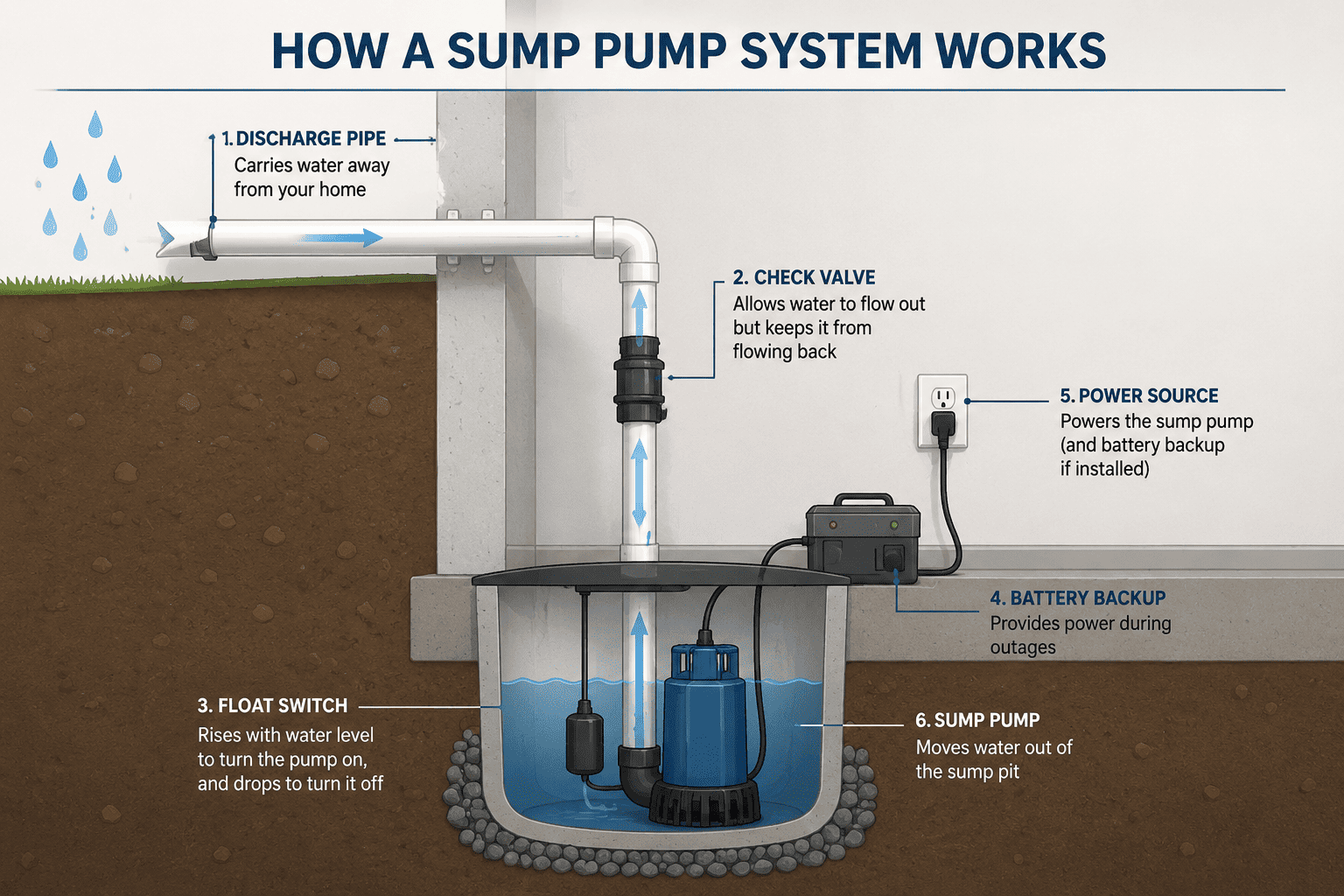
When your sump pump stops working, you need to understand what should be happening to figure out what's going wrong. The whole system depends on three main parts working together to keep your Pittsburgh basement dry.
The sump pit collects water from around your foundation
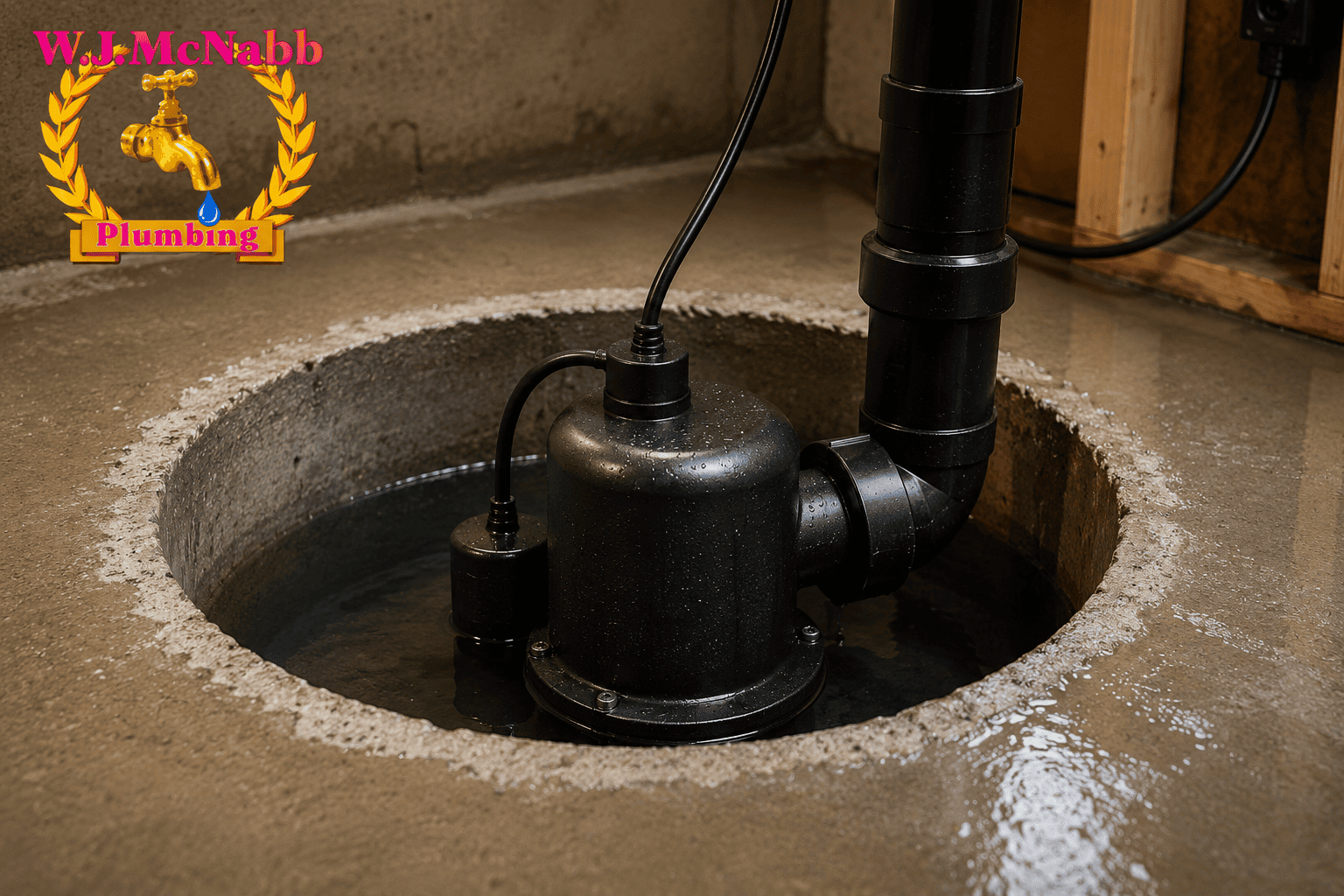
That pit in your basement floor isn't just a hole–it's positioned at the lowest point for a reason. Most pits measure about 2 feet deep and 18 inches across. Water gets there through perimeter drains (also called drain tiles) that run along your foundation. Here in Pittsburgh, our heavy rains and clay soil mean these flexible perforated pipes work overtime channeling groundwater away from your foundation walls and down into that pit. Some homes have interior drain tiles too, collecting water from beneath the basement floor.
The float switch tells your pump when to work
Think of it like the mechanism in your toilet tank. Water rises in the pit, lifting a hollow plastic float that's connected to your pump. Hit the right level, and that float triggers the electrical switch to fire up the motor. Pump runs, water goes out, float drops back down, pump shuts off. The beauty is it only works when needed, giving the motor time to cool between cycles.
The discharge pipe gets water away from your house
Your pump pushes water through a discharge pipe that needs to carry it at least 10 to 20 feet from your foundation. There's a check valve in that line–water flows out, but it can't flow back in. Without proper discharge placement, you're just moving water in circles, overworking your pump for nothing. That discharge needs to empty into a storm drain, slope away through your yard, or reach some other drainage spot that actually moves water away from your house.
Sump Pump Problems Pittsburgh Homeowners Deal With Most
Pittsburgh's clay soil and heavy rainfall create tough conditions that push sump pumps harder than most cities. We've seen these problems countless times in basements across the Steel City, and catching them early saves you from expensive flooding repairs.
Your sump pump won't turn on
Power problems cause most sump pump failures. Check if the pump unplugged itself, the circuit breaker tripped, or you lost power. Float switches get stuck and won't trigger the pump even when water rises in your pit. Debris blocks the pump intake and stops it from pulling water out. Pump intakes and filter screens collect mud and sediment over time, preventing the system from doing its job.
The pump runs but water stays put
Clogged or frozen discharge pipes block water from leaving your house, so the motor runs without moving anything. Pittsburgh winters freeze discharge lines solid. Debris like gravel or mud jams the impeller, keeping it from moving water even though the motor works. Air gets trapped in the system instead of water, and you'll need to unplug the pump for several minutes before trying again.
Your sump pump never stops running
Float switches stuck in the "on" position force the motor to run constantly, wearing it out fast. Bad check valves let water drain right back into the pit after pumping, creating a never-ending cycle. High water tables during wet seasons might require frequent pump operation, but this wears out your system quicker.
Weird noises coming from the pump
Grinding or rattling means worn motor bearings or loose parts that need immediate attention. Humming without water movement points to a clogged intake, jammed impeller, or failing motor. Keep running a failing motor and you'll face complete system failure.
The pump turns on and off too fast
Wrong float switch positioning triggers rapid on-off cycles called short cycling. Malfunctioning check valves or pumps too powerful for your basin size cause this damaging pattern. Pumps should cycle no more than 6-10 times per hour to avoid overheating.
Water in your basement even with a working pump
Small pumps can't handle heavy storm volumes, leaving water behind. Discharge pipes must send water at least 10 feet from your foundation, or it circles right back. You might need a second pump or an upgrade to higher capacity for proper protection.
Fix Your Sump Pump Problems: Step-by-Step Solutions That Work
Start With Power–Check Every Connection
Your pump won't run without electricity. Plug the unit firmly into the outlet. Head to your circuit breaker panel and look for tripped breakers–reset any you find. GFCI outlets trip without warning signs, so press that reset button hard. Still nothing? Test the outlet with a lamp or phone charger to confirm you have power.
Test Your Float Switch Right Now
Pour water into your sump pit until the float lifts up and triggers the pump. Watch the float rise with the water level, activate the pump, then drop back down when the water pumps out. Clear away any debris jamming the float's movement. Lift the float arm by hand to see if the pump responds.
Clear Out Discharge Pipe Blockages
Turn off the power at your breaker first. Check both ends of your discharge pipe for leaves, dirt, ice, or other blockages. Run a plumber's snake through the line, twisting back and forth until you break through the clog. Flush the entire pipe with hot water once you've cleared the blockage.
Clean Your Pump Intake and Impeller
Pull the pump out of the pit and scrub the screen clean of all accumulated dirt. Clean debris off the impeller blades–buildup here stops water from moving.
Check That Valve Is Doing Its Job
Look at your check valve to make sure it's working properly. When this valve fails, water flows right back into your pit, making your pump work twice as hard for nothing.
When You Can Fix It Yourself vs When to Call Your Pittsburgh Plumber
Quick fixes most homeowners can handle
You can clear clogged discharge pipes yourself - just turn off the power first and use a plumber's snake to break through blockages. Cleaning debris from intake screens and testing stuck float switches are straightforward jobs that don't require special tools. Replacing an old pump with a similar model works as a DIY project if you're comfortable with basic plumbing and electrical connections. These jobs typically mean cutting and fitting PVC pipes with proper primer and cement.
Problems that need professional expertise
Motor failures, electrical damage, and pumps that keep failing after you've tried fixes demand professional repair. Pumps running 7 to 10 years that consistently underperform need replacement rather than more repairs. Burned-out motors, breakers that keep tripping, or any wiring problems require licensed help for your safety and to meet Pittsburgh building codes. When water starts rising in your basement, call immediately - don't try DIY fixes when you're dealing with active flooding.
Getting the right Pittsburgh sump pump service
Look for licensed plumbers who know Pittsburgh's unique groundwater challenges and clay soil conditions. The right technician diagnoses problems quickly and ensures your installation meets local codes. Professional service becomes essential during storm emergencies when your basement floods and every minute counts.
We've been working with Pittsburgh sump pumps for over 30 years. We know how our city's weather and soil conditions strain these systems, and we're ready to help when yours stops working.
Call an Experienced Pittsburg Plumber to Troubleshoot Your Sump Pump Today
Don't wait until a failed sump pump leaves your basement under water. At WJ McNabb Plumbing, we've helped Pittsburgh homeowners protect their homes from costly flooding, water damage, and mold growth for decades. Our licensed plumbers have the experience, tools, and local knowledge to quickly diagnose sump pump problems, whether your system is running constantly, failing to activate, or struggling to keep up during heavy rain. We provide honest recommendations, upfront pricing, and dependable workmanship backed by our commitment to customer satisfaction. If you're experiencing sump pump issues or want peace of mind before the next Pittsburgh storm arrives, contact WJ McNabb Plumbing today to schedule a professional sump pump inspection, repair, or replacement service.
--------------------
Disclaimer: The prices mentioned in this blog are for informational purposes only and our due diligence of calling around. Remember pricing may vary based on location, job complexity, and other factors. Actual costs may differ and are subject to change without notice. For an accurate estimate, please contact a licensed plumbing professional.
Meet the Founders: Melisa and William (Bill) McNabb
William “Bill” McNabb is the co-owner and master plumber of W.J. McNabb Plumbing, a highly respected, family-owned plumbing company serving Pittsburgh, PA, and surrounding communities. With over 40 years of hands-on experience in the plumbing industry, Bill leads the company’s operations and is recognized for his technical expertise, integrity, and commitment to customer satisfaction. Bill holds NASSCO certifications in PACP, MACP, and LACP, ensuring his team adheres to the highest standards in pipeline and infrastructure assessment.
Melisa McNabb is the co-owner and office manager of W.J. McNabb Plumbing. She plays a pivotal role in the company’s daily operations, customer relations, and business development. Melisa is often the first point of contact for customers, ensuring that each client receives prompt, friendly, and knowledgeable service. She is instrumental in upholding the company’s mission of delivering top-rated service and maintaining a seamless experience for both customers and staff.
Location
W.J. McNabb Plumbing operates from their McKees Rocks location, serving homeowners and businesses throughout Pittsburgh and the surrounding communities. Their expert plumbing services and customer care reach neighborhoods across Allegheny, Beaver, Butler, and Washington Counties
Why Trust WJ McNabb Plumbing
You should call W.J. McNabb Plumbing because they treat every customer like a neighbor, showing up promptly, explaining repairs clearly, and always respecting your home and time. Their team is known for being personable, patient, and genuinely caring—whether you’re in a panic with a leak or just need advice, you’ll get friendly, honest service from people who want to make your day easier, not harder. Homeowners consistently praise their professionalism, kindness, and the peace of mind that comes from working with a family-owned business that values relationships as much as results.